language
En Ku Ar

Image Title calendar2025-01-17

Halaf and Late Chalcolithic occupations at Shakar Tepe in the Shahrizor Plain, Iraqi Kurdistan: Preliminary report of the 2023 excavations

The Shahrizor Plain is one of the ideal fields for tracking the transition from Neolithic village life in the Fertile Crescent to Urbanisation which occurred in Mesopotamia because of its geographical location connecting the mountainside valleys along the Zagros and the downstream Diyala River that flows into the Tigris. Our field project aims to obtain archaeological materials to unveil this process. Following the first excavations at Shakar Tepe conducted in 2019, we excavated two additional areas at this site in 2023, including one of the three satellite mounds that were newly identified around the main mound. The cultural remains of the Late Halaf settlement uncovered from Operation B at Shakar Tepe II date back to approximately 5600–5400 calBC. On the other hand, Operation C at Shakar Tepe I yielded a thick deposit of the Late Chalcolithic occupations dated to ca. 3800–3600 calBC. The recovered materials fill the time ranges in the late prehistoric chronology of the site and will contribute to our understanding of the historical role of this region in the transition from Neolithisation to Urbanisation.

Image Title calendar2024-01-28

NEW INVESTIGATIONS IN THE ENVIRONMENT, HISTORY, AND ARCHAEOLOGY OF THE IRAQI HILLY FLANKS: SHAHRIZOR SURVEY PROJECT 2009–2011

Recent palaeoenvironmental, historical, and archaeological investigations, primarily consisting of site reconnaissance, in the Shahrizor region within the province of Sulaymaniyah in Iraqi Kurdistan are bringing to light new information on the region’s social and socio-ecological development.

Image Title calendar2024-01-28

Grdi Kani Shaie, excavations provided the first stratigraphic sequence for this previously unexplored region

Kani Shaie is a site located in the Bazian Valley that has been excavated by the University of Coimbra, with many collaborations since 2013. This 60m diameter mound revealed continuous occupation from the Ubaid period in the 5th millennium BCE to the Early Bronze Age in the 3rd millennium BCE

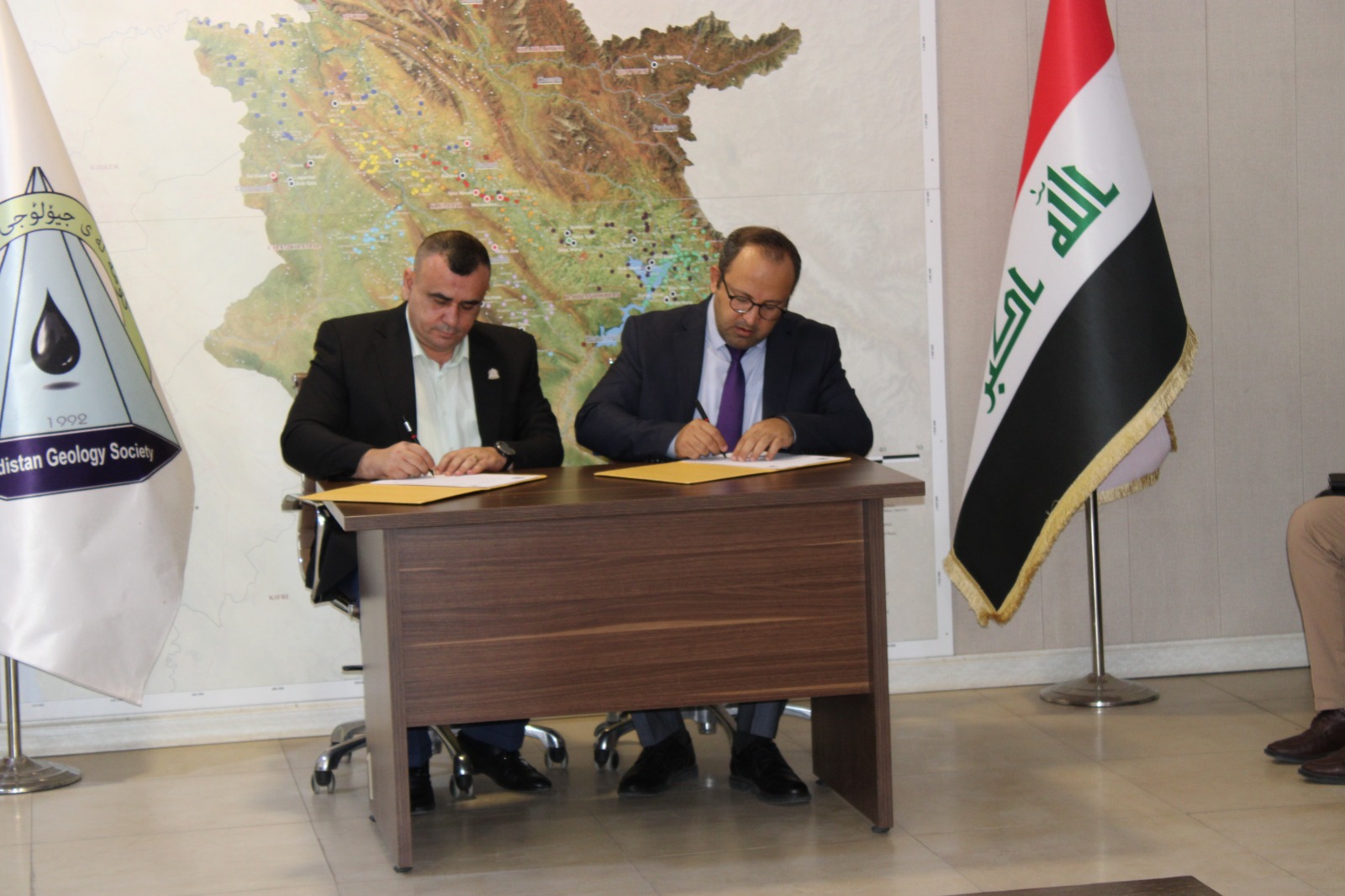
Memorandum of Understanding Between Slemani antiquities and heritage Directorate and Kurdistan Geological Society Slemani Branch
Article Name

Slemani antiquties and heritage Directorate  signed a memorandum of understanding between our directorate as a government entity and Kurdistan Geologists Association Slemani Branch to further coordinate and serve these two fields in Kurdistan in general and Sulaimani in particular.
 The memorandum of understanding is for the opening of joint courses and participation of cadres of both sides in such courses that are necessary and important for archaeological and geological affairs in both sides. 
 The new vision of archeology is to combine a number of important sciences, above all geology, which is considered to complement the stages of archaeological work. We have dozens of important archaeological and geological sites in Slemani province.