
language
En Ku Ar

Image Title calendar2024-01-11

10,000 years ago one of the earliest villages on the Shahrizor Plain was built and lived in at the nearby settlement mound of Bestansur

10,000 years ago one of the earliest villages on the Shahrizor Plain was built and lived in at the nearby settlement mound of Bestansur.

Image Title calendar2024-02-28

Opening a scientific course for training and teaching in photogrammetry program

Training course on photogrammetry program was held from 18/2/2024 to 23/2/2024 in Slemani. The course was taught by archaeologist Tiago Costa for a few days

Image Title calendar2025-01-17

Halaf and Late Chalcolithic occupations at Shakar Tepe in the Shahrizor Plain, Iraqi Kurdistan: Preliminary report of the 2023 excavations

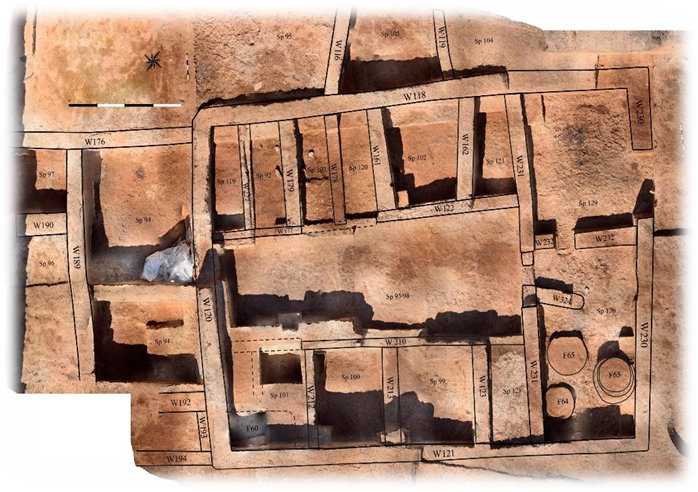
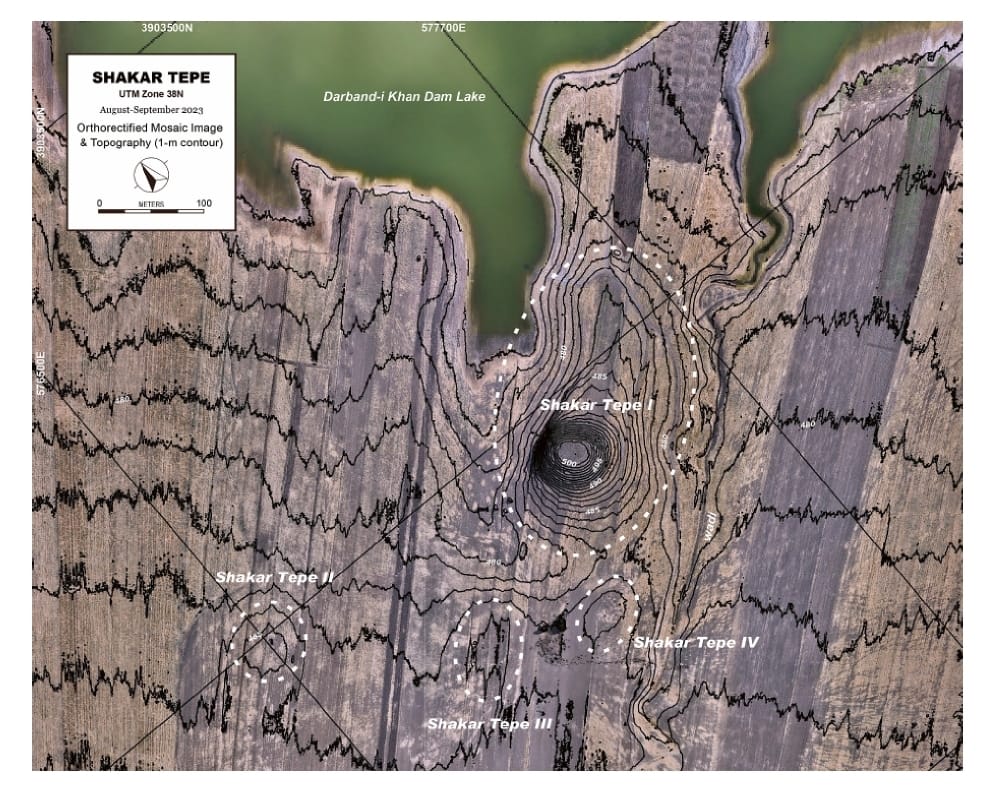
The Shahrizor Plain is one of the ideal fields for tracking the transition from Neolithic village life in the Fertile Crescent to Urbanisation which occurred in Mesopotamia because of its geographical location connecting the mountainside valleys along the Zagros and the downstream Diyala River that flows into the Tigris. Our field project aims to obtain archaeological materials to unveil this process. Following the first excavations at Shakar Tepe conducted in 2019, we excavated two additional areas at this site in 2023, including one of the three satellite mounds that were newly identified around the main mound. The cultural remains of the Late Halaf settlement uncovered from Operation B at Shakar Tepe II date back to approximately 5600–5400 calBC. On the other hand, Operation C at Shakar Tepe I yielded a thick deposit of the Late Chalcolithic occupations dated to ca. 3800–3600 calBC. The recovered materials fill the time ranges in the late prehistoric chronology of the site and will contribute to our understanding of the historical role of this region in the transition from Neolithisation to Urbanisation.

NEW INVESTIGATIONS IN THE ENVIRONMENT, HISTORY, AND ARCHAEOLOGY OF THE IRAQI HILLY FLANKS: SHAHRIZOR SURVEY PROJECT 2009–2011

Article Name

 In 2009, a joint team from the University of Heidelberg and the Directorate of Antiquities of Sulaymaniyah initiated an archaeological survey in the province of Sulaymaniyah, Iraq, in the region of the Shahrizor Plain. Since 2011, the Shahrizor Survey Project (SSP) has been joined by staff from University College London, focusing on historical and palaeoenvironmental research, and from Leiden University, investigating prehistoric periods.2 The survey area lies in the east of the province near the border with Iran.

The Shahrizor is a plain stretching from the north-west to the south-east along the western edge of the Zagros and south-east of Sulaymaniyah between Arbat and 
Halabja (Fig. 1). The research goal is to apply a multidisciplinary approach to bring forth new information on the region’s palaeoenvironment, history, and archaeology, in order to better understand how these three components interrelated and influenced the region’s social and socio ecological development in the past.