

240128075418.png)

240526040018.jpg)
The Last Hunters of the Eastern Fertile Crescent Archaeological Project
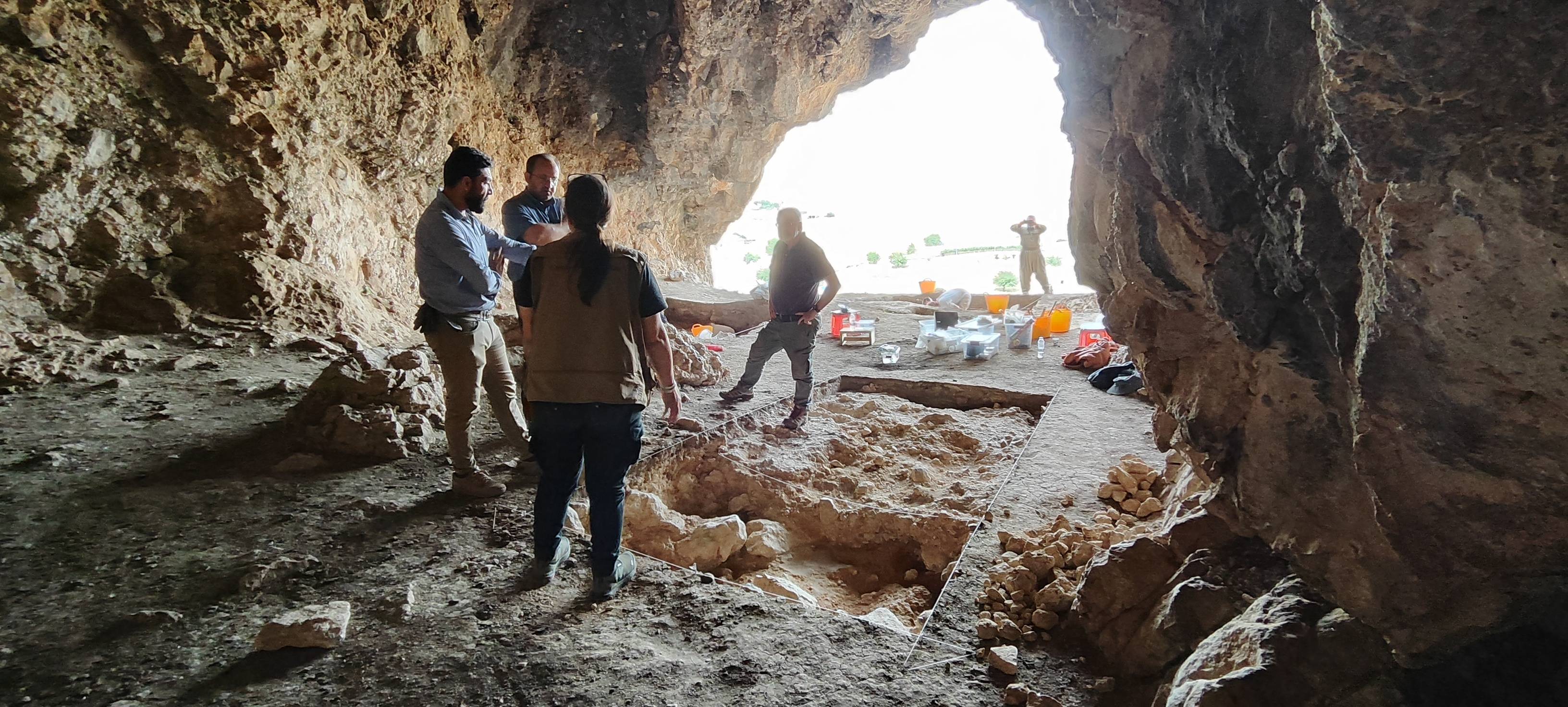
Ashkawta Rash(ئەشکەوتە ڕەش) is a Palaeolithic cave site located. 35 km northwest of the city of Slemani, near the Bazian Gates. Excavations at Ashkawta Rash Cave began in May-June 2023 by a joint team from the University of Liverpool and the Slemani Directorate of Antiquities & Heritage directed by Professor Eleni Asouti, with Professor Douglas Baird as co-director and Mr Amanj Ameen (MA) as the Slemani Directorate representative.
Research at Ashkawta Rash Cave is conducted as part of the Last Hunter-Gatherers of the Eastern Fertile Crescent (LASTHUNTER) project, with a permit issued by the General Directorate of Antiquities & Heritage in Erbil, and are generously supported by the Gerda Henkel Stiftung and the British Institute for the Study of Iraq. The first season of work at Ashkawta Rash Cave revealed late Pleistocene deposits at the cave threshold and in its main chamber dating from the Epipalaeolithic period, based on the lithic industry which displays clear affinities with that of neighbouring Palegawra Cave.
Late Pleistocene sediments were unusually rich in charred plant remains while burnt animal bone (wild caprines, tortoise, etc.) was also abundant. Previous research by the same team at Palegawra Cave (published in 2020) has established a chronology for the Epipalaeolithic period in the Slemani region between 20,000 and 13,000 years ago. The excellent charcoal preservation will enable an extensive programme of radiocarbon dating at Ashkawta Rash Cave, and help determine how it relates to the Epipalaeolithic habitation known from the neighbouring Palegawra Cave. Large scale, intensive sampling of soil and its processing by water flotation has produced approximately 200 bags of charred plant remains from Epi palaeolithic deposits at Ashkawta Rash.
Such scale of charred plant recovery is unique for Palaeolithic sites anywhere in the Zagros, and makes Ashkawta Rash Cave the most important source of new data about Palaeolithic plant uses and late Pleistocene vegetation ecology in the Eastern Fertile Crescent.