

New exhibition of the archaeological investigations at Gird-i Yasin Tepe

Yasin Tepe (Gird-i Yasin Tepe)
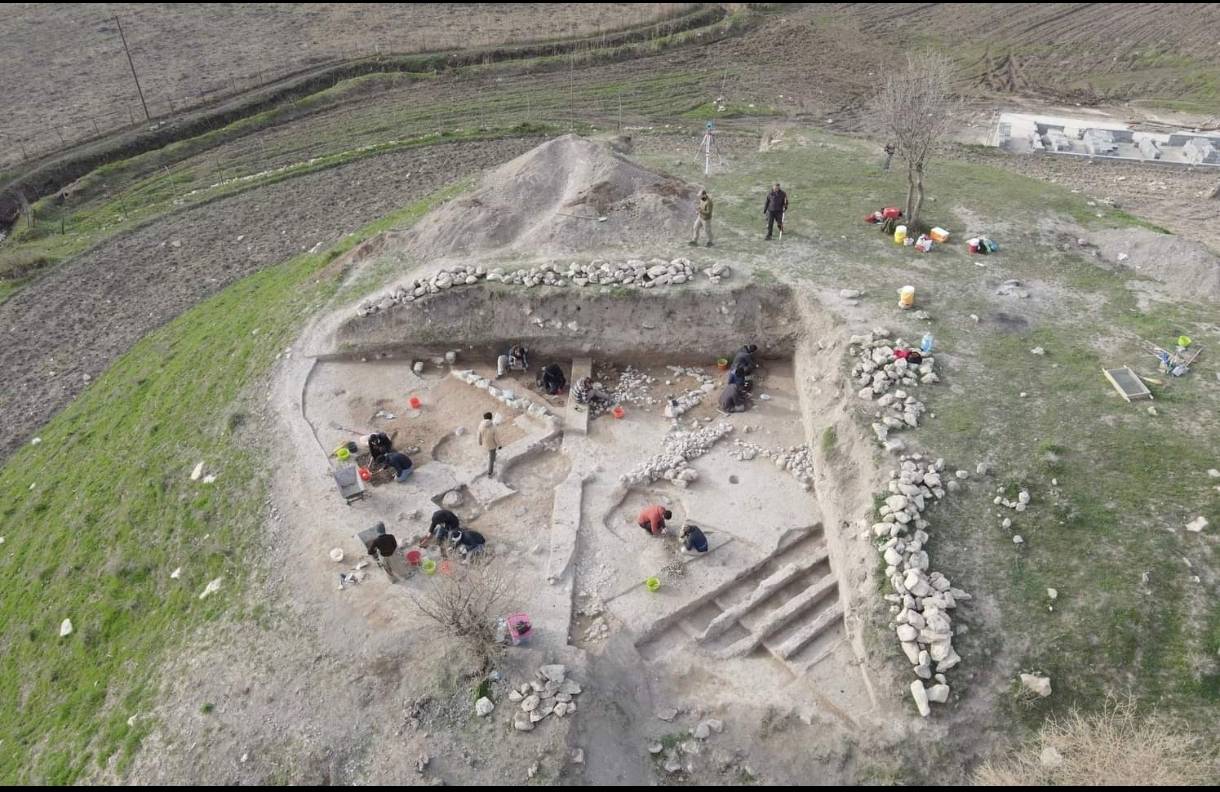
The site is one of the largest tell-type sites in the Slemani Governorate and contains rich archaeological remains from the Neolithic to the Islamic periods. Yasin Tepe Archaeological Project led by Chubu University has been conducting the archaeological investigation of the site since 2015 and the excavations continues since 2016. So far, we have identified intensive Iron Age (Assyrian period) occupations in the lower town area containing an elite residence and un-looted brick tomb.
Yasin Tepe is located in the western part of the Shahrizor Plain, ca. 30 km south of Sulaymaniyah. The site is one of the largest tell-type sites in the Sulaymaniyah Governorate. It measures ca. 700 × 600 m (40 ha) with 20 m in height. The consist of acropolis mound and the lower town.
Chubu University (Japan) expedition started the excavation of the site in 2016. Since then, we have identified extensive Iron Age (8th-7th centuries BCE) settlement in the lower town. Yasin Tepe was probably an important military and commercial city when the Assyrian Empire controlled Iraqi Kurdistan. The excavations continue to reveal the Iron Age history of Sulaymaniyah Governorate.
The Yasin Tepe exhibition was setup in the Slemani Museum in November 2023. It was carried out by Chubu University funded by the Agency for Cultural Affairs, Government of Japan. It is a part of the training program for the enhancement of the Slemani Museum. It is also intended to inform the public people about the importance of cultural heritage in the Slemani Governorate.
The exhibition shows a bathtub coffin which was excavated from the un-looted brick tomb dated to the 8th-7th centuries BCE. The coffin was placed inside a tomb camber built with baked bricks and had a vaulted ceiling.
Next to the bathtub coffin, a showcase contains some selected finds which are stored in the Slemani Museum. Noteworthy is a bronze necklet with cuneiform inscription which was found in a room of the elite residence, southeast of the lower town. It shows the possibility that the temple of Nabû was erected at Yasin Tepe. Other major finds included the bronze lamp, pottery, and stamp seals excavated from the un-looted tomb. These objects inform us that there was a strong Assyrian cultural influence was present during the Iron Age at Yasin Tepe. (Shin Nishiyama: Chubu University, Japan).