language
En Ku Ar

Image Title calendar2024-03-07

HUMAN OCCUPATION ALONG THE FOOTHILLS OF NORTHWESTERN ZAGROS DURING THE LATE PLEISTOCENE AND THE HOLOCENE IN THE RANIA AND PESHDAR PLAINS

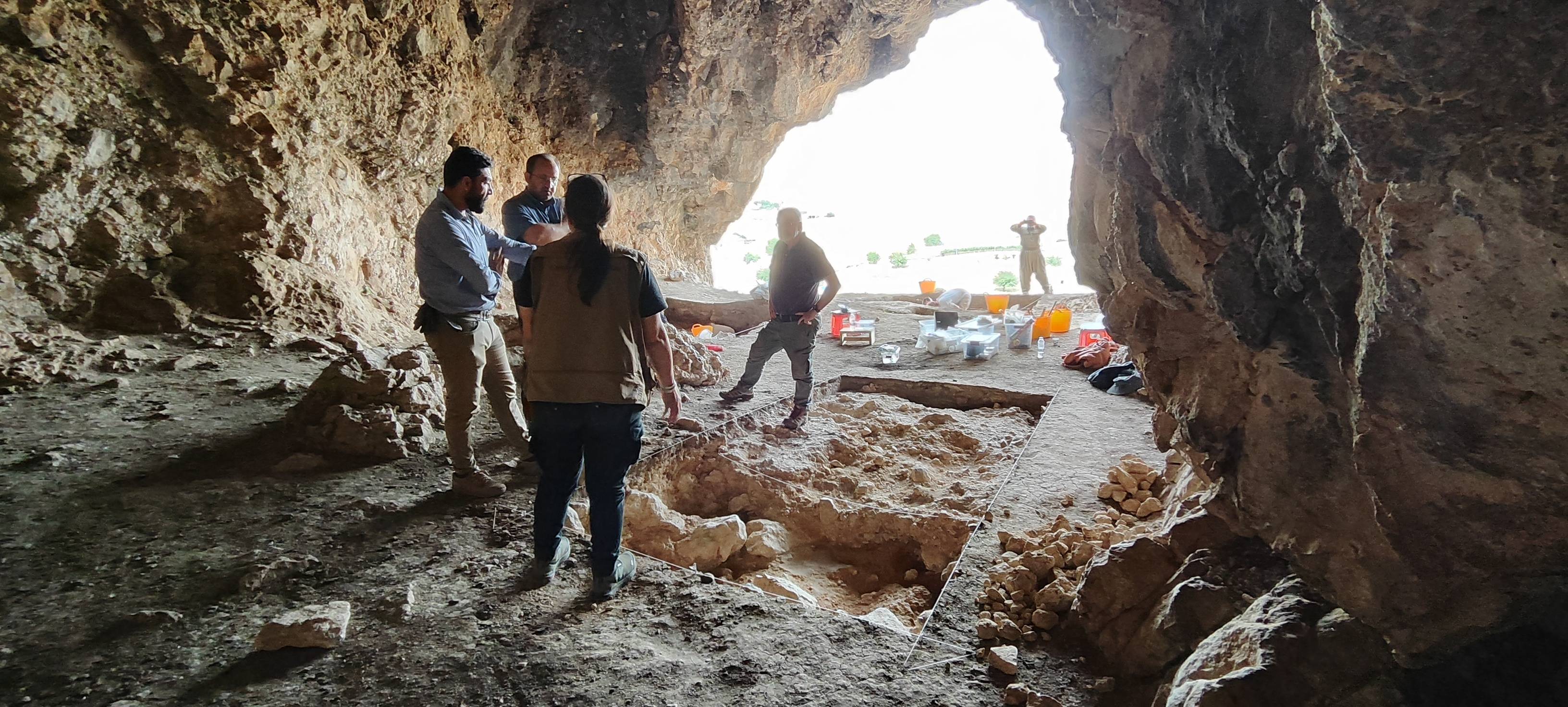
The south-western foothills of the Zagros range, in Iraqi Kurdistan, have long been largely unexplored because it has been impossible for archaeologists to carry out fieldwork research in this area for more than half a century.

Image Title calendar2025-01-17

Halaf and Late Chalcolithic occupations at Shakar Tepe in the Shahrizor Plain, Iraqi Kurdistan: Preliminary report of the 2023 excavations

The Shahrizor Plain is one of the ideal fields for tracking the transition from Neolithic village life in the Fertile Crescent to Urbanisation which occurred in Mesopotamia because of its geographical location connecting the mountainside valleys along the Zagros and the downstream Diyala River that flows into the Tigris. Our field project aims to obtain archaeological materials to unveil this process. Following the first excavations at Shakar Tepe conducted in 2019, we excavated two additional areas at this site in 2023, including one of the three satellite mounds that were newly identified around the main mound. The cultural remains of the Late Halaf settlement uncovered from Operation B at Shakar Tepe II date back to approximately 5600–5400 calBC. On the other hand, Operation C at Shakar Tepe I yielded a thick deposit of the Late Chalcolithic occupations dated to ca. 3800–3600 calBC. The recovered materials fill the time ranges in the late prehistoric chronology of the site and will contribute to our understanding of the historical role of this region in the transition from Neolithisation to Urbanisation.

Image Title calendar2024-01-28

Human Landscape - Site (Trans-) Formation in the Transtigris Area

he formation of Ear per rone Age centres in pesopotamia is the resut of ong term processes hich can be e pained b en ironmenta economica and socia de eopments heir phsica appearance is not on a testimon of centrai ation but aso of the socia eoution relected in its impact on andscapes Large te sites surrounded b a eb of roads for inter-regiona and inter-site communication traceabe through aeria and sate ite photograph ofer a testing ground for ne methods hie the pains of northern S ria ha e itte ariation in terrain the centra Trans‐Tigris area sho s a high diferentiated terrain afected b the ridges of the agros iedmont one 

Gird-î Qalrakh: a small mound in the North-eastern Shahrazor Plain

Article Name

Gird-î Qalrakh: a small mound in the North-eastern Shahrazor Plain 


The site of Gird-î Qalrakh is a small but steep settlement place in the North-eastern Shahrazor-Plain. It was excavated in three seasons (2016, 2017 and 2019), the fourth season 2023 has just started. The archaeological discovery will be carried out jointly by the Slemani Archaeological and Heritage Directorates, along with two universities (University of Erlangen and University of Frankfurt), in Gridi-Kazhaw and Qalrgh. It will continue for years.
The excavations have produced rather unexpected archaeological results, dating in particular to the Parthian-Hellenistic and Sasanian periods. Most unusual is the evidence for textile production at Qalrakh in association with finds of elaborate sealing at the top of the mound. The lower top levels have revealed some solid occupation in pre-Sasanian times, which is currently under investigation. Current research focusses on the Sasanian phase, in particular on the overall Sasanian-period settlement system in the Shahrazor Plain and in relationship to places in North-western Iran. 

Seal impression B-1158-2682b with jumping goat-fish.